
Space X
Some investors saw this coming. The pattern with high-profile IPOs is often the same: strong early demand pushes the stock up fast, then that demand fades as the weeks go on and reality sets in. That’s roughly what played out here. SpaceX opened for trading on June 12, 2026 at $135 a share and closed its first session at $161. Today, the stock trades in the $139 to $146 range, below that first-day close, though still above the original IPO price.
What is important to note is the lock-up period. When a company goes public, early investors and employees who held shares before the IPO are typically barred from selling them for a set window of time, usually 90 to 180 days. That’s the lock-up, and it exists to prevent a flood of insider selling from hitting the stock right out of the gate. At IPO, only about 4-5% of SpaceX’s roughly 13 billion shares were in public hands, the rest belonged to early investors and employees who were locked out of selling. That scarcity sent the stock soaring past $225 in its first week. Then the lock-up started unwinding. Instead of releasing all at once, SpaceX staggered it into tranches: the first big release, about 20% of insider shares, unlocked on August 6 and more through August and September, and the rest of the standard lock-up doesn’t fully clear until December 8, 2026, six months after the IPO (except Elon Musk’s roughly 6.4 billion shares sit on a separate lock-up that doesn’t expire until June 2027). Each unlock meant more sellers hitting the market at once, and the stock pulled back to as low as $104.83 in early August, more than 50% off its peak. It has since climbed back above its $135 IPO price on renewed investor interest.
Small Companies (Small Cap) Are Finally Joining the Rally
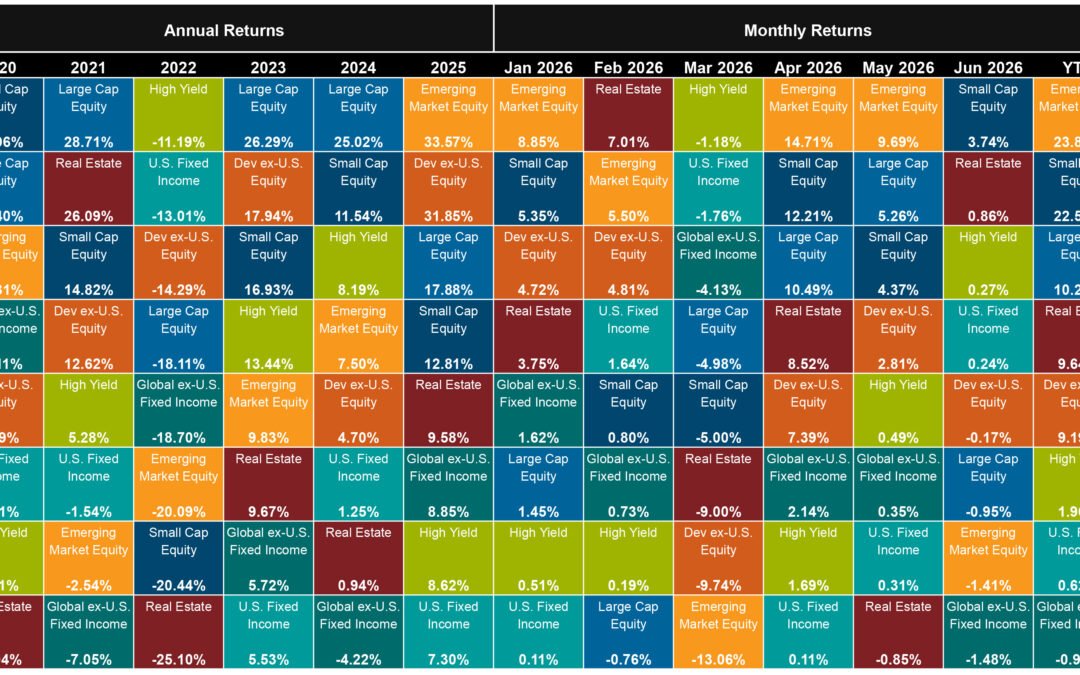
The Russell 2000 Index, which tracks smaller U.S. companies, has seen renewed strength as investors have started looking beyond the biggest technology names and toward companies that could benefit from a broader economic recovery. Small caps have outperformed large caps recently, with the index up over 23% year-to-date and hitting new record highs in August. That’s a notable shift after years of small caps sitting on the sidelines while a handful of mega-cap tech names carried the broader market.
A few things are driving it. Lower borrowing costs are easing pressure on smaller companies that tend to carry more floating-rate debt, and small caps are also more sensitive to domestic economic activity, fiscal policy, and reshoring trends, areas that are seeing renewed momentum. Valuations play a role too. After years of underperformance, small-cap stocks entered the year priced much lower relative to their earnings than large-cap stocks. That gap gave investors more confidence that small caps still had room to grow in price as more money rotated into them.
Oil
Here’s something counterintuitive: the world just lived through the largest oil supply disruption in history, and prices didn’t spike nearly as much as anyone expected. When the Strait of Hormuz shut down back in March, roughly 14% of the world’s oil supply got cut off overnight, more than 14 million barrels a day. By historical logic, that should have sent prices into 2008-style territory. Instead, Brent crude, after an initial jump past $120, has spent the summer trading in a wide but far less dramatic range.
What’s really happening is a story about buffers running out, not prices exploding. Governments and oil companies dipped into emergency reserves to smooth things over, U.S. reserves are now sitting near historic lows, and inventories worldwide have dropped by 2.7 million barrels a day since the war started. Analysts are warning that once those reserves are gone, there’s no more cushion left. Meanwhile, demand itself is quietly shrinking, expected to fall 1.6 million barrels a day this year, as high fuel costs push consumers and businesses to use less. It’s less “oil shock” and more “oil squeeze,” and for markets, that slower, drawn-out version may end up being the more dangerous one, because it can drag on far longer than a single price spike ever would.
Gold Quietly Hit Another Record
While stock markets have remained near record highs, gold has continued climbing to new highs. Investors have been buying gold amid geopolitical uncertainty and concerns about government debt and inflation. When both stocks and gold are rising, it’s often a sign that investors are looking for growth and protection at the same time.
Investors Shift From “AI Hype” to “AI Reality”
The AI theme continues to drive markets, but investors are becoming more demanding. Companies announcing large AI investments are facing more scrutiny, especially if the spending increases faster than revenue. This does not mean the AI trend is over. It means investors are moving from the first phase of excitement (“who is building AI?”) to the next phase (“who is actually making money from it?”)