
What one of retail’s most famous mistakes teaches us about concentration risk.
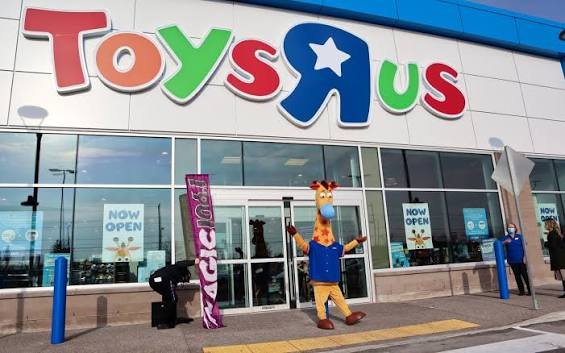
In 1999, Toys “R” Us had a bad Christmas. Its brand new website was so overwhelmed with holiday orders that thousands of gifts didn’t arrive on time, a failure so public it earned the company a $350,000 fine from the FTC. Leadership needed a fix, and they needed it fast.
Their solution was Amazon.
In 2000, Toys “R” Us signed a 10 year deal making Amazon the exclusive home for its online toy sales. The company paid Amazon $50 million a year plus a cut of sales, and in return, ToysRUs.com simply redirected shoppers to Amazon’s site. It made sense. Amazon had already built the infrastructure, the technology, and the customer trust that online retail demanded, things Toys “R” Us would have needed years to replicate on its own. Partnering with the company best equipped to solve the e-commerce problem seemed like the obvious move and for a business that had just failed publicly at handling its own online orders, aligning with the strongest player in the industry made sense.
For a couple of years, it worked; however, by 2003, things shifted. Amazon began quietly opening its marketplace to other toy sellers, undercutting the exclusivity Toys “R” Us thought it had paid for.
Toys “R” Us sued and they eventually won the legal right to exit the deal and years later Amazon paid a $51 million settlement. On paper, that looks like vindication.
Toys “R” Us sued and Amazon paid a $51 million settlement.
They won the case. They still lost the decade.
In practice, it was too late. The company had spent nearly a decade with no independent digital infrastructure, no e-commerce muscle, and no direct relationship with its own online customers. When it finally tried to build its own platform, it was starting from zero, while Walmart, Target, and Amazon itself had years of head start. That gap, layered on top of heavy debt from a 2005 leveraged buyout, became one of the contributing factors in the company’s 2017 bankruptcy.
The real lesson isn’t about Amazon. It’s about concentration risk.
Toys “R” Us didn’t just use a channel partner, It outsourced its entire online identity to a single relationship, one that was simultaneously becoming its biggest competitor. When that relationship turned, there was no fallback plan, no owned infrastructure to fall back on, and no time to build one.
If this sounds familiar from a different context, it should. It’s the same principle that governs how I think about investment portfolios. You’d never let a single stock make up 90% of a client’s holdings, no matter how strong that company looked. The risk of concentration isn’t about whether the asset is good. It’s about what happens to the whole portfolio if that one position turns against you. A business is no different. Revenue concentrated in one client, one channel, or one partner isn’t a sign of a weak business, but it is a sign of a fragile one, and those are not the same thing.
This is exactly the kind of exposure I look for when I sit down with business owners to assess exit readiness. Nobody wakes up and decides to put all their eggs in one basket,it usually happens gradually over time.
- One client or channel driving an outsized share of revenue. If it disappeared tomorrow, would the business survive the transition?
- A key relationship you don’t control. A supplier, distributor, platform, or referral source that holds more leverage over your business than you’d like to admit.
- Something you used to handle yourself, but let go, because a partner could more easily do it. You don’t feel the loss until the day you actually need it back.
A useful check: if any single client, channel, or partner accounts for more than 15 to 20% of your revenue, that’s worth a closer look. It doesn’t automatically mean there’s a problem, but it does mean you should be able to answer, with confidence, what your plan is if that relationship ended tomorrow.
Concentration risk doesn’t just erode day to day profitability. It’s one of the first things a buyer’s due diligence team will price into (or price out of) an offer and it’s one of the clearest signals of whether a business can weather a shock.
If you’ve never mapped out where your concentration risk actually sits, client base, revenue channels, key partnerships, it’s worth doing before a buyer, or a bad year, does it for you. If you want a second set of eyes on that map, I’m always happy to talk it through.