
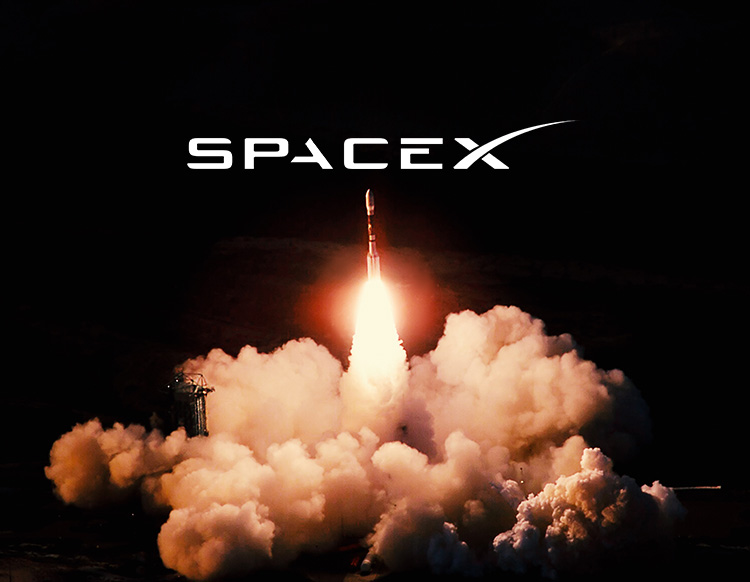
SpaceX debuted on the Nasdaq today under the ticker SPCX at $135 per share. Here’s what every investor should understand before deciding whether to participate.
At $1.77 trillion, SpaceX is now the largest IPO in history, it’s bigger than Tesla on day one, dwarfing Saudi Aramco’s record-breaking 2019 offering, and landing as roughly the seventh most valuable publicly traded company in the world. The demand has been extraordinary: Reuters reported the offering attracted more than $250 billion in interest against a $75 billion raise, making it nearly four times oversubscribed.
By any measure, this is a moment.
But “historic” and “good investment” are not the same thing. At this valuation, you need to ask a harder question than whether SpaceX is a great company. The real question is how much of an unwritten future you’re willing to pay for today.
What Actually is Being Sold with SpaceX?
Here’s something many investors may not realize: the SpaceX that listed today is not quite the company most people pictured.
In February 2026, SpaceX acquired xAI, Elon Musk’s AI company, which also owns X (formerly Twitter) in a deal worth roughly $250 billion. By May, xAI had been fully folded in and rebranded as SpaceXAI. Just like that, a rocket and satellite company became a rocket, satellite, AI, and social media company.
The price showed up quickly in the financials and SpaceX brought in over $18.5 billion in revenue in 2025, but still posted a nearly $5 billion loss, mostly from absorbing the high costs of xAI’s infrastructure, servers, and data centers.
However, if Grok (xAI’s AI assistant) gains traction and X’s ad revenue rebounds, the deal could eventually make money but the reality is that when you buy SpaceX today, you are also buying a struggling social media and a very expensive AI company in a highly competitive arena. Neither of these companies are what investors had in mind when hearing about the SpaceX IPO.
The One Part of SpaceX That’s Actually Proven: Starlink
Peel back the Starship ambitions, the Mars mission narrative, and the AI moonshots, and you find a genuinely remarkable business hiding inside the hype: Starlink.
SpaceX’s satellite internet division generated approximately $11.3 billion in revenue in 2025, up roughly 50% year over year, with operating profit near $4.4 billion. That is not a speculative asset. That is a fast-growing, cash-generating subscription business with global reach, a structural advantage that no competitor can easily replicate, and a product that is actively reshaping internet access in remote and underserved regions worldwide.
Apply a standard software-as-a-service valuation multiple to Starlink alone, and you get a business worth somewhere between $400 billion and $600 billion on its own merits.
Here is where it gets interesting and uncomfortable.
The IPO is priced at $1.77 trillion. If Starlink is worth $400 to $600 billion, then the remaining $1.1 to $1.35 trillion of the price tag requires you to believe three other things simultaneously:
- that Starship becomes a dominant commercial launch and transportation platform
- that orbital data centres prove technically and economically viable
- that a newly absorbed AI company becomes a serious competitor to OpenAI and Google.
All three of those bets need to pay off for the valuation to make sense.
You are not buying a company, you are buying a portfolio of bets with only one proven asset bundled alongside several that exist mostly on paper.
So Is It a Good Investment?
The honest answer is: it depends entirely on what you believe, and over what time horizon.
Independent analysts are sharply divided. Bulls point to a $165 price target, anchored in Starlink’s growth trajectory and the optionality of SpaceX’s broader platform. Bears see fair value closer to $63, citing valuation math that simply doesn’t close at $1.77 trillion without a string of outcomes that haven’t yet materialized. Morningstar’s bear case puts fair value between $600 and $800 billion, less than half the IPO price. NYU valuation professor Aswath Damodaran, one of the most respected independent voices on equity pricing, put SpaceX closer to $1.3 trillion and flagged the company’s claimed $28.5 trillion total addressable market as stretching the boundaries of credibility.
At $135 per share, you are paying roughly 94 times 2025 revenue. For context, SpaceX generated $18.7 billion in revenue last year while posting a $5 billion loss. The price is not pricing in what SpaceX is … it is pricing in what SpaceX might become.
History adds a note of caution. Mega-IPOs have a poor track record of outperforming the market in their first year. The mechanics of a small initial float, index inclusion flows, and early lockup expiry create enormous near-term volatility that has little to do with the underlying business.
The first real test arrives in November 2026, when SpaceX files its first public earnings report. That is when the market will get a clear look at Starlink subscriber growth, xAI capital burn, and whether Starship is generating meaningful commercial revenue. Until then, much of the price is faith.
The Bottom Line
SpaceX is a genuine technological achievement and Starlink is a real, growing, profitable business. If you stripped away everything else and just owned Starlink, you would own something worth owning.
But at $1.77 trillion, you are not just buying Starlink. You are buying Starship commercialization, orbital data centers, an AI company absorbing billions in losses, and a social media platform in the middle of a turnaround, all controlled by a founder whose vision can shift the company’s direction without any input from public shareholders. If you believe in Elon Musk’s long game and can genuinely hold for a decade, a small position may make sense. If you are evaluating this the way you would evaluate any other public company (on current earnings, reasonable multiples, and predictable cash flows) the numbers do not support the price.
The space economy is real. SpaceX’s role in shaping it is real. Whether this particular price, on this particular day, reflects that reality is a very different question.
This article is for informational purposes only and does not constitute investment advice. Always consult a qualified financial advisor before making investment decisions.